

Search is changing faster than ever.
For years, businesses focused only on ranking on Google. But today, people are searching differently. Instead of typing queries into Google, many users now ask tools like ChatGPT, Gemini, and other AI platforms for answers.
This shift has introduced a new concept:
Generative Engine Optimization (GEO).
If you want your business to stay visible in 2026 and beyond, you need to understand GEO.
Let’s break it down in simple terms.
What Is Generative Engine Optimization (GEO)?

Generative Engine Optimization (GEO) is the process of optimizing your content so that AI search engines can find it, understand it, and include it in their generated answers.
Unlike traditional SEO, where you try to rank on page one of Google, GEO focuses on:
Getting mentioned in AI-generated responses
Becoming a trusted source for AI tools
Structuring content in a way machines understand clearly
In short:
SEO helps you rank.
GEO helps you get referenced.
GEO vs SEO:
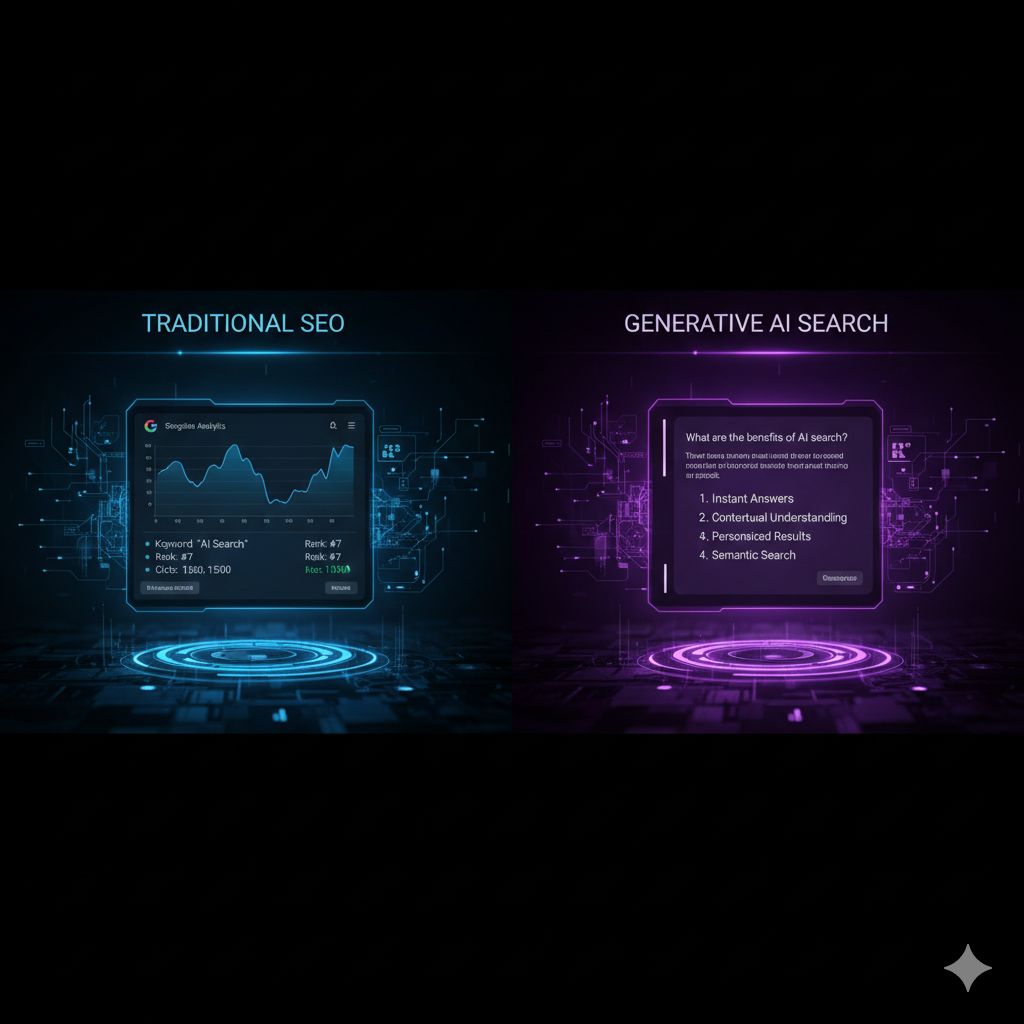
Let’s simplify it.
Traditional SEO:
- Focus on keywords
- Rank on Google SERPs
- Optimize for search algorithms
- Compete for top 10 positions
Generative Engine Optimization (GEO):
- Focus on clarity and authority
- Get cited in AI answers
- Optimize for machine understanding
- Compete for being the “source”
Google shows 10 links.
AI tools give 1 structured answer.
That changes everything.
Why GEO Matters in 2026
More users are:
- Asking full questions instead of typing keywords
- Using AI tools for research
- Trusting AI summaries over multiple websites
If AI doesn’t recognize your website as a credible source, your visibility drops — even if you rank on Google.
That’s why the future of SEO is not just rankings.
It’s recognition.
How AI Search Engines Choose Content
AI tools don’t randomly pick websites.
They prefer content that:
- Clearly answers questions
- Uses simple and structured language
- Shows expertise and authority
- Has factual, helpful information
- Is logically organized
Messy, keyword-stuffed blogs won’t work anymore.
Clear, helpful, well-structured content wins.
How to Optimize for Generative Engine Optimization (GEO)
1️⃣ Write Question-Based Content
AI platforms respond to questions.
Instead of writing vague articles, use clear sections like:
What is Generative Engine Optimization?
How does GEO differ from SEO?
Why is AI search important?
This makes it easier for AI tools to extract answers.
2️⃣ Use Clear, Simple Language
Complex language confuses both users and AI.
Write like you’re explaining to a business owner, not a machine.
Simple sentences.
Direct answers.
Clear structure.
That’s what works.
3️⃣ Structure Content Properly
Use:
Headings (H1, H2, H3)
Bullet points
Short paragraphs
Defined sections
AI systems understand structured information better.
4️⃣ Build Topical Authority
Instead of writing random blogs, focus on content clusters.
For example:
AI in digital marketing
AI SEO tools
Marketing automation with AI
GEO strategy
When your website covers related topics deeply, AI recognizes your authority.
5️⃣ Focus on Trust & Credibility
AI tools prefer:
Fact-based content
Clear explanations
Real expertise
Avoid:
Clickbait
Over-promises
Fluffy content
Credibility matters more than ever.
Will Traditional SEO Disappear?

No.
Traditional SEO is still important.
Google search is not going anywhere.
But the strategy must evolve.
The smartest approach in 2026 is:
SEO + GEO combined.
Rank on Google.
Get cited in AI.
Build authority everywhere.
The Future of SEO in 2026 and Beyond

The future belongs to businesses that:
- Focus on real value
- Create educational content
- Solve actual problems
- Build authority in their niche
Algorithms change.
Platforms evolve.
But helpful content always wins.
Generative Engine Optimization is not a replacement for SEO.
It’s the next level of it.
Final Thoughts
Search behavior is evolving.
Users are no longer just searching.
They are asking.
If your content is not structured, clear, and authoritative, AI tools will skip it.
Generative Engine Optimization (GEO) is about preparing your brand for this new reality.
The goal is simple:
Be the source AI trusts.
Businesses that adapt early will dominate.
Those that ignore it may slowly disappear from digital visibility.
The future of search is already here.
The question is — are you optimizing for it?